Nile cruise vs dahabiya: which is right for you?
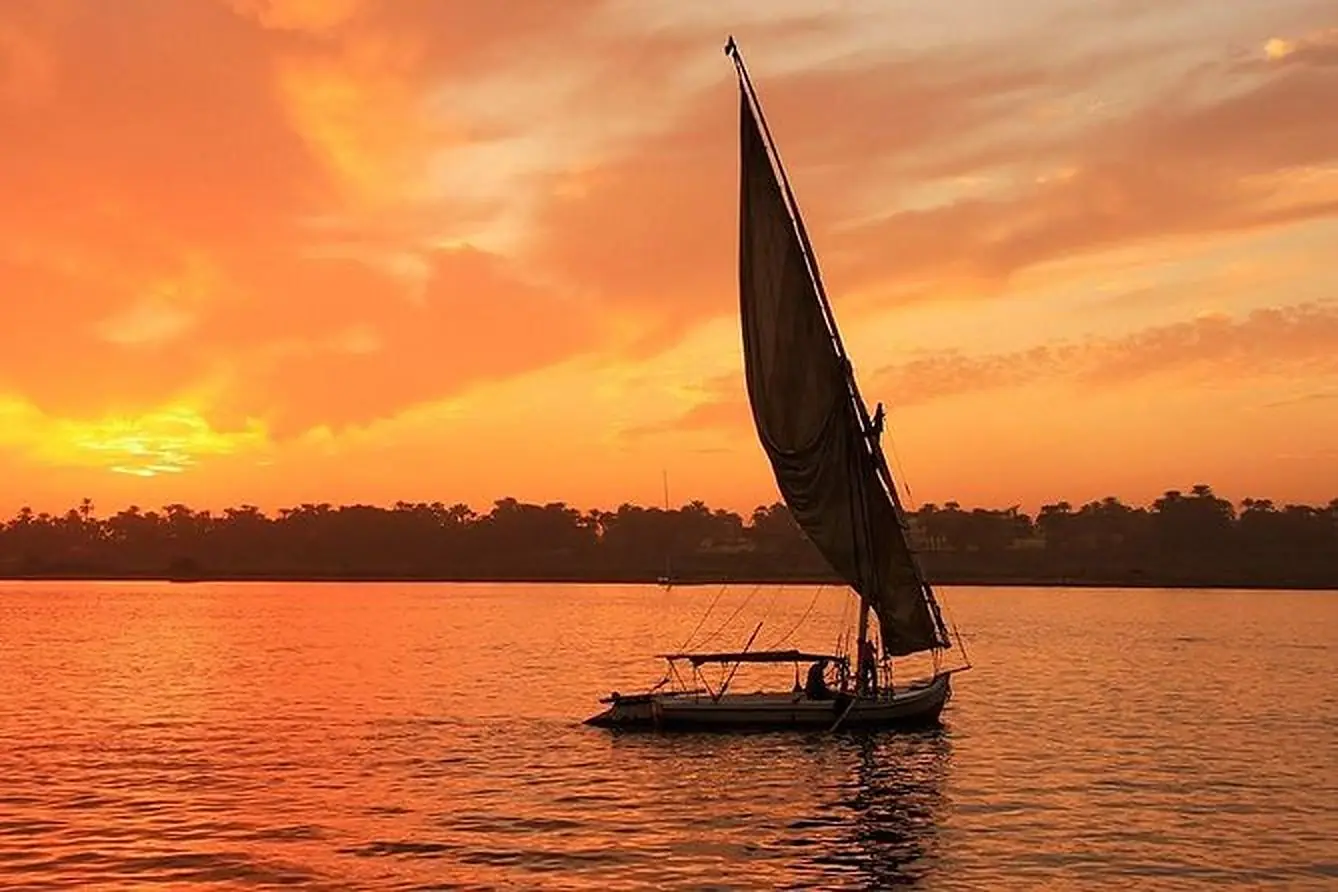
Both take you along the same stretch of the Nile, between Luxor and Aswan, and both stop at the same great temples on the way. The difference is the boat. A Nile cruise ship is a floating hotel with dozens of cabins and a fixed timetable; a dahabiya is a traditional sailing boat with a handful of cabins that moves at the river's pace. Neither is better in general, but one will suit you better, and this page should make it clear which.
The short answer
- Choose a cruise ship if this is your first trip, if you want the classic route at the best price, or if you like more space, facilities and a bit of life around you in the evenings. It is what every one of our Nile journeys includes.
- Choose a dahabiya if you want quiet, very few fellow guests, a slower pace with time under sail and stops the large ships cannot make, and the extra cost is comfortable for you.
Nile cruise and dahabiya, side by side
| Nile cruise ship | Dahabiya | |
|---|---|---|
| The boat | A river ship of several decks, usually with dozens of cabins and often more than a hundred guests. | A two-masted sailing boat, typically with four to ten cabins, so rarely more than about twenty guests. |
| Route | Luxor to Aswan, or the reverse. Ours sail south, from Luxor to Aswan. | The same stretch, often starting at Esna, south of Luxor. |
| Nights on board | Usually three or four. Four on our journeys. | Usually four or five, sometimes more. |
| How it moves | By engine, on a timetable shared with many other ships. | Under sail when the wind allows; a tug tows it when the wind drops. |
| Stops | Edfu and Kom Ombo, at the main moorings. | Edfu and Kom Ombo, plus smaller sites the large ships pass, such as Gebel el-Silsila and El Kab, and quiet moorings by the bank. |
| On board | Restaurant, bar, lounges and a sun deck, usually with a small pool. Organized evening entertainment. | A sun deck, a lounge and a dining area. Usually no pool and no organized entertainment. |
| On our journeys | Included: a 5-star cruise ship, MS Le Fayan or similar, with full board. Luxury ship upgrade: + $250–$400 per person. | + $600–$900 per person on top of the journey price, on request. |
| Best for | First trips, families, tighter budgets, and travelers who like facilities and company. | Couples, honeymoons, small family groups, return visitors and anyone who values quiet. |
Sizes, routes and nights vary from boat to boat. The one you would sail on is named in your written quote, with its route and number of nights.
The Nile cruise ship, honestly
A cruise ship is the simplest way to see the Nile. You unpack once, the ship moves while you eat and sleep, and the timetable is built around the temples. On our journeys it is a 5-star ship, MS Le Fayan or similar, with full board: breakfast, lunch and dinner on board. Drinks on the cruise are not included.
The downsides are the crowds and the timetable. Many ships keep much the same schedule, so they reach Edfu and Kom Ombo at much the same time. At the busier moorings ships tie up side by side, several deep, so you may walk through another ship's lobby to get ashore, and your window may face the ship next door. Evenings tend to be organized, with a costume party or a belly-dance or whirling-dervish show. Some people love that; some would rather sit on deck with a book.
One thing works differently on our journeys: the sightseeing is private. On many ships the shore visits go out as a group, with one guide for many passengers. With us you have your own Egyptologist and vehicle at every stop, so you can arrive earlier, stay longer or leave when you have seen enough.
A luxury cruise ship is the middle option: still a cruise ship, but an upgrade from the standard 5-star ship. In our trip estimator: + $250–$400 per person on top of the journey price. Ask for it when you inquire.
The dahabiya, honestly
A dahabiya is a traditional Nile sailing boat with two tall sails, the way well-off travelers saw the Nile in the nineteenth century. Today's dahabiyas keep that shape, with modern cabins and bathrooms.
The appeal is quiet. With a handful of cabins, you share the boat with only a few other people. Under sail, the loudest sound is the water. A dahabiya can tie up at the bank wherever suits, often alone, and many stop at places the large ships pass by, such as the sandstone quarries of Gebel el-Silsila and the rock tombs of El Kab.
The trade-offs are real too. It costs considerably more. It is slower: a dahabiya usually takes four or five nights for a stretch a cruise ship covers in three or four, and when the wind drops, a tug tows it. There is usually no pool, no gym and no evening program. On a small boat the other guests matter more, because you share one deck and often one table.
In our trip estimator it appears as “Private dahabiya”: + $600–$900 per person on top of the journey price, added on request. The boat, its route, the number of nights and what is included are set out in your written quote before you pay. Because a dahabiya has so few cabins, ask early, especially for Christmas and New Year (20 Dec–5 Jan).
What stays the same either way
- The great sites. Karnak and Luxor Temple, the Valley of the Kings, Edfu and Kom Ombo are on the route either way, then Aswan at the end, with your own Egyptologist at each.
- Abu Simbel is off the river route. It is about three hours south of Aswan by road, or about an hour by air. Some of our cruise journeys include it; on the others we can add it.
- The seasons. October to April is the comfortable time to be on the river. Christmas and New Year (20 Dec–5 Jan) fills the boats months ahead. From May to September, Luxor and Aswan are regularly above 105°F (40°C), but it is quieter and considerably cheaper. Our month-by-month guide has the detail.
Which one suits you?
First-time visitors
The cruise ship, in most cases. It covers everything a first trip needs at the lowest price, and your private guide takes care of the crowds at the temples. Our 8-day Classic Egypt is the essential first-time route, with four nights on board.
Couples and honeymooners
This is where a dahabiya is easiest to justify: quiet evenings, sunsets under sail and no loudspeaker announcements. If the budget is tighter, a cruise ship in the shoulder weeks, late October or March, is still romantic. See how we plan honeymoons.
Families with children
Usually the cruise ship: there is more room to move around, and most cruise ships have a small pool on deck, something for children to look forward to after a morning of temples. A large family filling most of a small dahabiya can also work well. See how we plan family trips.
Travelers who walk slowly
Ask us before you choose. Both involve stairs and gangways, and getting ashore from a dahabiya moored at a riverbank can mean a plank and an uneven bank. We will tell you honestly what a specific boat involves.
Return visitors
A dahabiya. If you have already done the classic route, the slower pace and the smaller sites make it feel like a different trip.
And the felucca?
A felucca, like the one in the photo at the top of this page, is something else again: a small open sailboat with a single sail, taken for an hour or two rather than slept on. On our cruise journeys you sail one around Elephantine Island in Aswan at sunset. In Aswan, a felucca around the islands is also a day tour on its own, from $50 per person.
Our journeys with a Nile cruise
Every journey below includes a 5-star cruise between Luxor and Aswan, and each can be upgraded to a luxury ship or a dahabiya on request. Our Nile cruise page has the full detail, and our sample itineraries show how the cruise fits into 7, 10 and 14 days.
Journeys with a Nile cruise
“From” prices are per person, 2 sharing, with 5-star hotels and a 5-star Nile cruise where included, and vary by season. Your final price is fixed in writing before you pay.




Questions about Nile cruises and dahabiyas
Is a dahabiya worth the extra cost?
If quiet and a slower pace are what you want from the Nile, yes. If you mainly want to see the temples, a cruise ship with your own private guide does that just as well for less.
How many nights is a Nile cruise?
Usually three or four nights between Luxor and Aswan. Our journeys spend four nights on board, sailing south from Luxor to Aswan. A dahabiya usually takes four or five nights.
Can we choose a dahabiya on any of your journeys?
On the journeys that include a Nile cruise, yes, on request. In our trip estimator, a dahabiya is + $600–$900 per person on top of the journey price. The boat, the route and the number of nights are confirmed in your written quote before you pay.
Do dahabiyas really sail?
Yes, when there is wind. When there is not, a tug tows the boat, so it keeps to its route.
Not sure which boat suits you?
Tell us who is traveling and what matters to you. We will tell you honestly which we would choose, and send a day-by-day plan and price within 24 hours (Sun–Thu).
Plan My Trip